At Jersey Electricity, we believe in investing in talent. We don't just hire graduates; we develop future leaders who share our vision for the business, for years to come.
Our graduate scheme will help you develop the skills, knowledge, and experience to lead the way at Jersey Electricity.
The Jersey Electricity Graduate Leadership Trainee Programme is designed to provide you with a comprehensive understanding of our business through a series of work placements across different departments. We aim to nurture your potential and prepare you for a senior management role within the next five to seven years.
Graduate discovery events
Join our 𝐆𝐫𝐚𝐝𝐮𝐚𝐭𝐞 𝐃𝐢𝐬𝐜𝐨𝐯𝐞𝐫𝐲 𝐄𝐯𝐞𝐧𝐭𝐬 and take the first step toward leadership in energy and engineering!
A graduate programme at JE aims to develop the next generation of leaders, providing electrical engineering graduates with a programme of development, supported by practical experience and insights across the business. Learn more about the Graduate Leadership Trainee Programme at Jersey Electricity and what it has to offer.
A two-year programme
Participate in a structured two-year rotational programme, gaining hands-on experience in various departments.
Build your knowledge with experienced professionals
Our experienced professionals will support you through a comprehensive training and development programme. You will be given a clear career progression path with the potential to become a senior leader within five to seven years.
Your professional development may include:
Participation in JE Board, and management meetings, workshops, seminars, and conferences.
Internal leadership and management practical training.
The opportunity to shadow our COO, Mark Preece, or Executive Leadership Team member(s) for two weeks at a time.
Mentorship and guidance
Our experienced professionals will support you through the Graduate Leadership Trainee Programme with mentorship and guidance.
Being an employee of Jersey Electricity
Our vision is to enable life’s essentials and inspire a zero carbon future. We are an engaged and focused workforce, committed to ensuring we “keep the lights on” across the Island and explore new ways of providing energy and related services to Islanders.
Working at Jersey Electricity means you are part of a “family” of over 400 employees across a number of diverse business sectors from the distribution of energy to Retail and Commercial services.
About you and qualifications you need
If you are a graduate with a degree in Engineering (Electrical or Mechanical), with a willingness to work at both JE sites; Queen’s Road and La Collette, as required by the rotational programme, we want to hear from you. Our graduates will possess a keen interest in pursuing a career in management.
This role is open to existing residents of Jersey, Channel Islands, with a housing status of 'Entitled'.
Competitive salary and benefits package
We know that many of the jobs we offer are highly skilled and can take a long time to train for. Why not gain experience across the different business areas at JE whilst working towards becoming a senior leader?
We offer a competitive salary and benefits package.
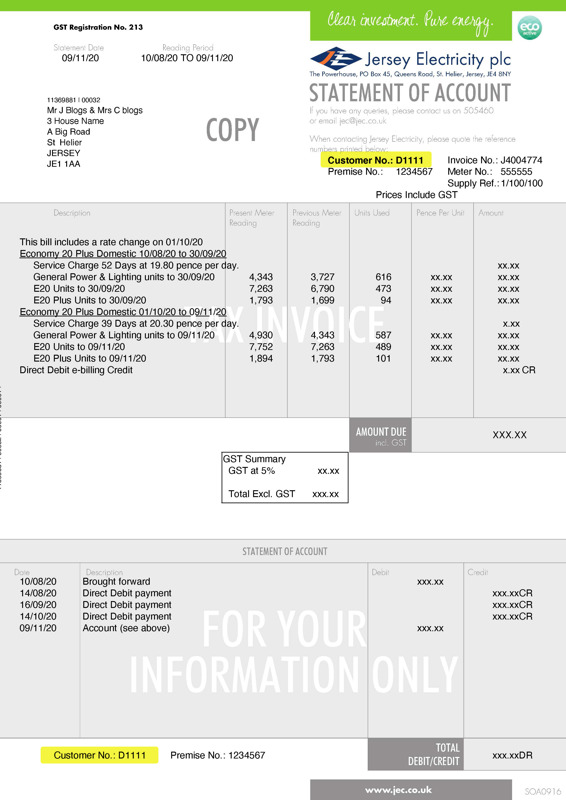
Your 5 character Customer Number can be found in the top right and bottom left corners of your bill.
Daily Service Charge
The Daily Service Charge covers energy support services such as metering, billing, Customer Care, safety obligations and other energy support services.
Off-peak
Off-peak means not at the mostpopulartime. Some of our tariffs provide discounted rates at off-peak times - for example, during certain periods at night.
Off peak charging times
Our current off peak electric vehicles times are from 00:00 to 06:59.
Dedicated supply circuit
A dedicated supply circuit is an electrical circuit that is set aside for a specific purpose, such as powering a boiler. It will work with a single appliance only.
It will have its own circuit breaker in your fuse box, and no other device or appliance will be able to draw power from it. A dedicated supply circuit ensures that appliances can draw the current they need without overloading your system, blowing a fuse or tripping an electric circuit.
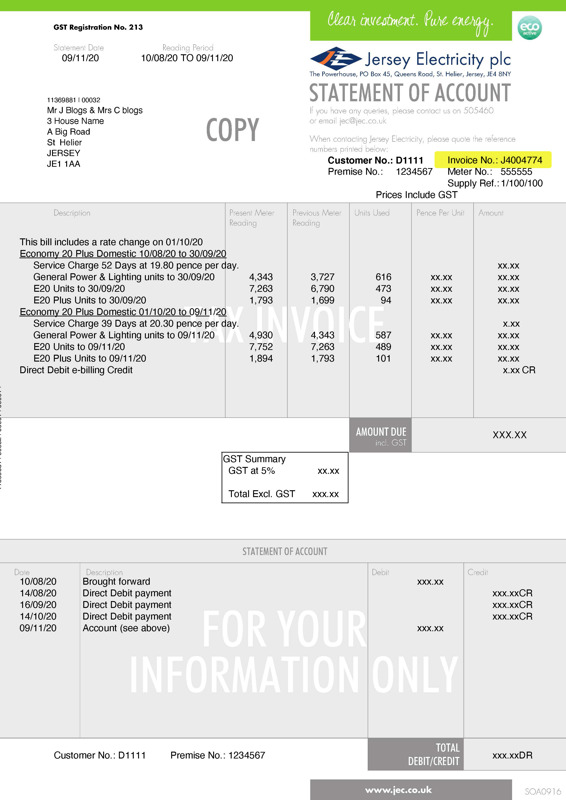
Invoice Number
This can be found on the top right corner of your bill here
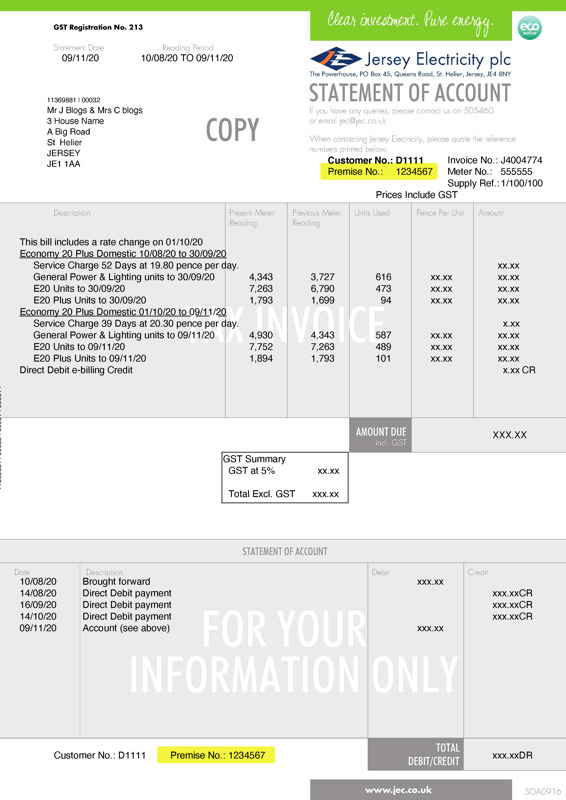
Premise Number
This can be found on the top right corner and bottom left corner of your bill.
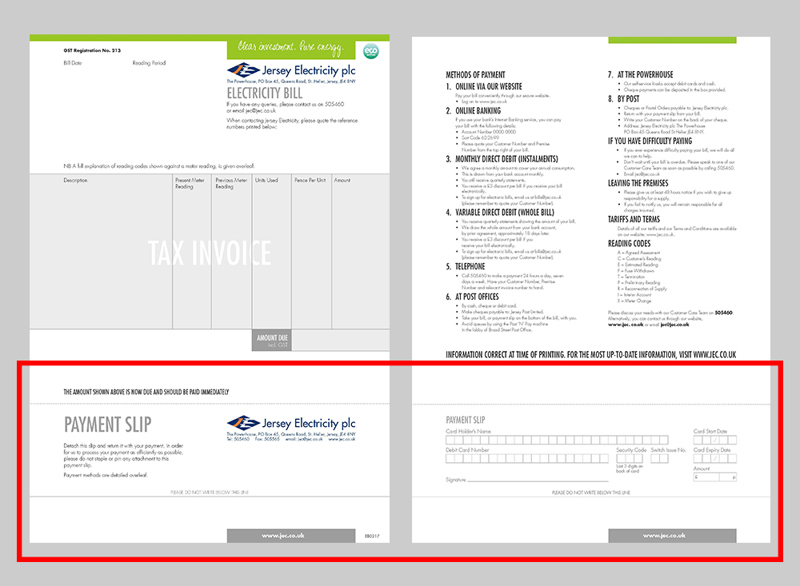
Payment Slip
This can be found at the bottom of your bill here
Peak Load
Peak load or peak demand is a short period when the demand for electricity is at its highest.
Kilowatt Hours
Electricity consumption is usually measured in kilowatt hours, or kWh for short. Each kWh of electricity equates to 'one unit of electricity' for billing purposes. A 1kW (1,000 Watts) appliance in use for one hour = 1kWh (one unit). The cost per unit used depends on which tariff you are on.
Three phase
Residential homes are usually served by a single-phase power supply, while commercial and industrial facilities usually use a three-phase supply.
One difference between single-phase and three-phase is that a three-phase power supply better accommodates higher loads. Single-phase power supplies are most commonly used when typical loads are lighting or heating, rather than large electric motors.
Another important difference between 3-phase power and single phase power is the consistency of power delivery. Because of the variations in voltage, single-phase power supply does not offer the same consistency as a three-phase power supply. A three-phase power supply delivers power at a steady, constant rate.
kVA
A kVA is simply 1,000 volt-amps. A volt-amp, or ampere, (VA) is the voltage times the current feeding an electrical load.
Embedded generator
Embedded generators like wind turbines and solar panels are connected to your electricity supply and provide electricity for onsite use. They also have the capability to export back to the grid.
Smart Card Number
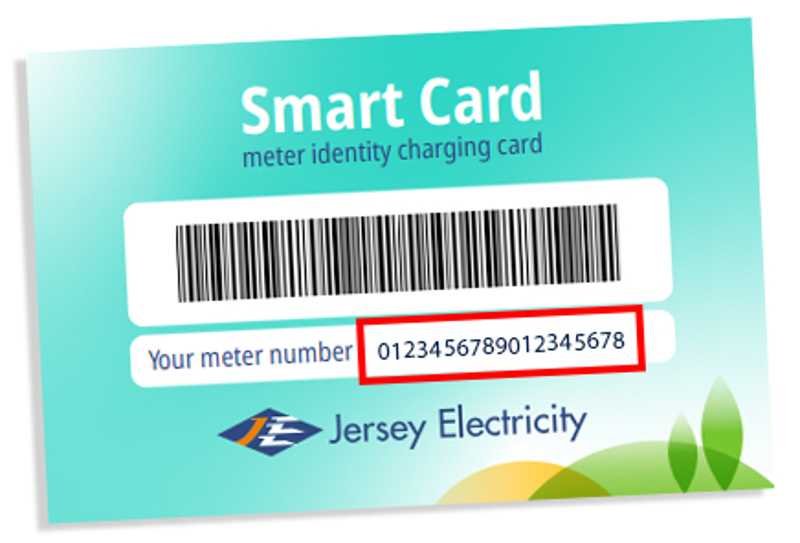
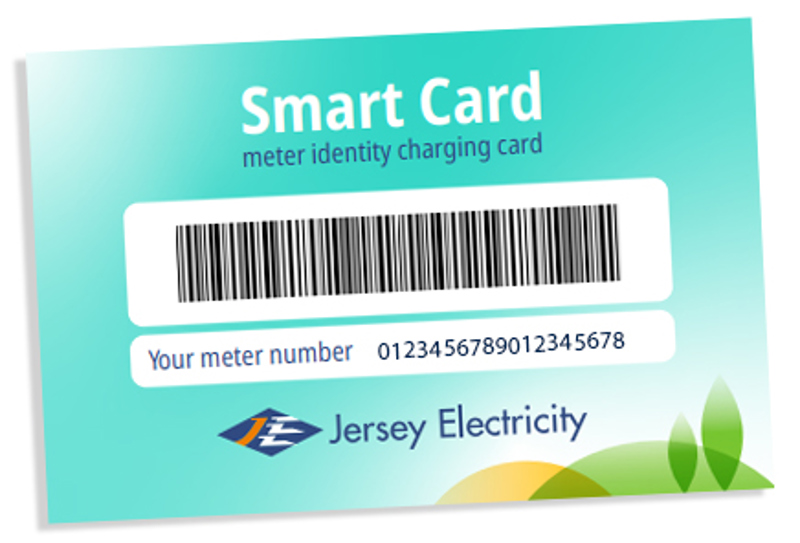
Your Smart Card Number is the 19-digit number displayed below the barcode on your Smart Card.
The Smart Card Number also contains your six-digit Meter Number that is also displayed on your meter. You need this to top up a Smart Pay As You Go Meter whether at a Payzone outlet or online.
Smart Card
A Smart Card contains your unique Smart Card Number used when topping up a Smart Pay As You Go Meter.
F-Credit
F-credit is a Pay As You Go meter display and means Friendly Credit. It is the period between 9pm and 8am. If the credit on your meter runs out during this period, your supply will remain on until 8am.
Decarbonise
The process of reducing carbon by replacing fossil fuels with fuel that is less harmful to the environment such as low-carbon electricity.
Regenerative braking
With conventional braking systems, the kinetic energy that was propelling the vehicle forward gets converted to unwanted and wasted heat by the friction of the brakes.
Regenerative braking recaptures much of the car's kinetic energy and converts it into electricity, so that it can be used to recharge the car's batteries.
In addition to improving the efficiency of a vehicle, regeneration can significantly extend the life of the braking system, as the mechanical parts will not wear out as quickly.
Power factor
Power factor is the ratio of useful power in kilowatts (kW) to apparent power, measured in kilovolt amperes (kVA). A perfect power factor would be 1.0, however in reality this is almost impossible to achieve. Office buildings are usually between 0.98 and 0.92. Bad power factor is anything below 0.85.
Electric flow boiler
Electric flow boilers are simple to install, quiet in operation, 100% efficient and integrate into most existing radiator or underfloor piped systems. Plus, with no flue or storage tank, an electric boiler is a space-saving option that can be installed almost anywhere in your home.
Approved heating system
A heating system, approved by Jersey Electricity, on a dedicated supply for use on one of our discounted heating tariffs.
To learn more about what's required for an approved heating system, view our current approved heating guidelines.
20-digit payment code
The 20-digit payment code is issued with your receipt for a Pay As You Go (PAYG) meter top-up. If your meter did not charge automatically, you can do it manually with the payment code. Press button A on your meter then key in your 20-digit payment confirmation code on the meter keypad, then press button B. Your meter will recognise the amount paid and charge accordingly.
Single phase
Single-phase power supplies are most commonly used when typical loads are lighting or heating, as in a domestic home, rather than large electric motors and higher loads. Single-phase power is a two-wire alternating current (AC) power circuit.
Energy Performance Certificate (EPC)
To access up to £9,000 government heating incentive, you will need an Energy Performance Certificate (EPC). We can help arrange this for you.
The Government's low carbon heating incentive is a financial incentive to help move households and businesses away from fossil fuels.
Those with an oil or gas heating system can now apply for up to £9,000+ match funding towards a low carbon alternative.